
Bukele’s Safer El Salvador, at What Cost to Human Rights?
By: Jasmine Hernandez
President Nayib Bukele won his first presidential election in El Salvador in 2019 and was re-elected in 2024 with overwhelming public support. Between 2019 and 2024, he secured roughly 83% of the vote, reflecting widespread approval of his aggressive security policies. For many Salvadorans, daily life has transformed. A country once defined by extreme violence is now considered one of the safest in the region. This is a significant point in history for El Salvadoran politics given that the FMLN and ARENA were holding Salvadoran politics for 30 years. But four years after Bukele’s implementation of the state of exception in March 2022, the real question is no longer whether El Salvador is safer. It is at what cost that safety has been achieved.
From a Women, Peace, and Security perspective, the answer is clear. The burden of this so-called security success has fallen disproportionately on women, families, and communities, often in ways that remain invisible in mainstream narratives. The state of exception, initially introduced as a temporary measure, has resulted in the mass detention of more than 91,000 people, many without warrants or sufficient evidence. While this policy is often framed as a necessary response to gang violence, it has fundamentally reshaped Salvadoran society, not just through incarceration, but through the social consequences that follow.
Women are at the center of these consequences. Across El Salvador, they have become the primary caregivers, providers, and advocates for detained family members. Research shows that the majority of those maintaining family ties with incarcerated individuals are women, including mothers, daughters, sisters, and partners, who take on increased financial and emotional burdens as a result. This is not simply a side effect of security policy. It is a gendered outcome that fits within Women, Peace, and Security concerns about how security measures affect women differently. The anniversary of the state of exception also highlights another overlooked reality. Children and families are paying the price of mass incarceration. Estimates suggest that tens of thousands of children have lost one or both parents due to detentions, creating long-term psychological and economic instability. These children are not just collateral damage. They represent a generation growing up under a system where security is prioritized over stability, care, and rights.
In addition, the erosion of due process and democratic institutions has created an environment where speaking out is increasingly dangerous. Human rights defenders and civil society actors face intimidation, detention, and criminalization for advocating for justice. his shrinking civic space directly undermines Women, Peace, and Security principles, which emphasize inclusive participation and the protection of those working toward peace and accountability.
Supporters of Bukele’s policies often point to dramatic declines in homicide rates as proof of success. These declines are important and show that security change is possible for the communities in El Salvador who have lived under the constant threat of violence. However, to focus solely on crime statistics risks ignoring the humanity definition of security embedded in the Women, Peace, and Security framework, which again, is one that includes human rights, rule of law, and the overall well-being of the communities meant to keep safe.
It is difficult to say this model is successful because the long-term sustainability of this security model remains to be seen. Analysts warn that Bukele’s approach relies on mass incarceration and the suspension of constitutional rights, which raises concerns about democratic backsliding and institutional crumbling. When security is achieved through the systematic dismantling of legal safeguards, it creates a fragile peace, one that may not hold over time.
From a Women, Peace, and Security lens, the situation in El Salvador challenges us to rethink what security really means. Is a society secure if women are forced to shoulder the burdens of incarceration alone? If children grow up without parents due to state policies? If civil society is silenced in the name of order?
The fourth anniversary of the state of exception should not only be a moment to reflect on reductions in violence. It should also be a moment to critically assess the human cost of those gains. Sustainable peace is not built solely through enforcement and incarceration. It requires accountability, inclusion, and the protection of rights, especially for those most affected by security policies. El Salvador’s transformation is undeniable. But if policymakers and the international community fail to interrogate the gendered and societal impacts of this model, we risk normalizing a version of peace that is neither inclusive nor just.
Author Bio
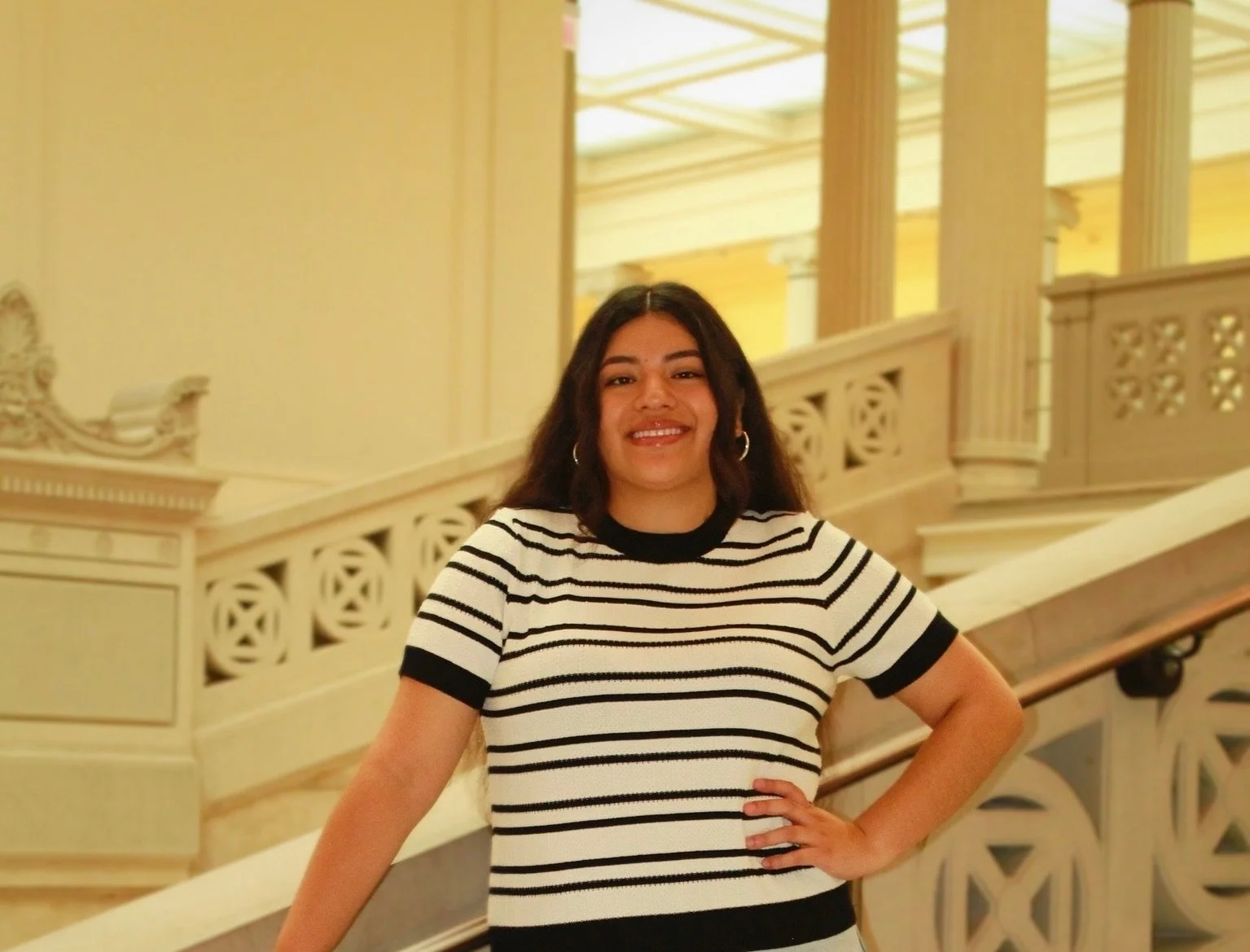
Jasmine Hernandez
Jasmine Hernandez is a current senior at George Washington University, graduating in May with a Bachelor of Science in Data Science and International Affairs and a Bachelor of Arts in Political Science. She served as a Publications Committee member during her junior year and was elected Vice President of Publications for the GWU Student Consortium on Women, Peace, and Security during her senior year. During the 2025–2026 academic year, her committee produced more than 15 written pieces, marking the highest output of published work on the WPS website. Under her leadership, the committee also expanded student engagement by receiving written submissions from students outside of the GWU consortium.